
You know, it’s one of those age-old debates in the PC building community – are large fans actually quieter than their smaller counterparts? I’ve always found it fascinating how something as simple as fan size can make such a dramatic difference in noise levels. When I first heard about Thermaltake’s new 200mm ARGB fan, it immediately got me thinking about the physics behind fan noise and why bigger might indeed be better when it comes to quiet operation.
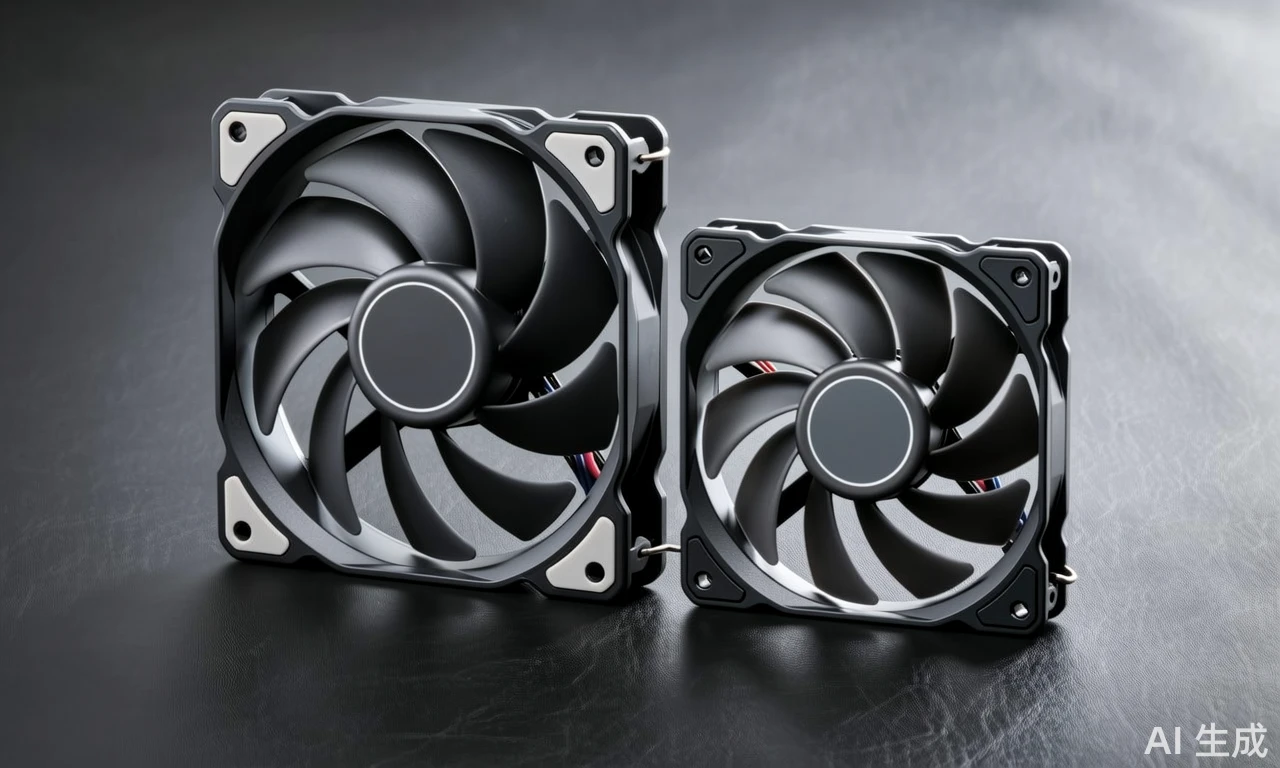
The Physics Behind Fan Noise
It’s really all about airflow dynamics and rotational speed. Larger fans like the 200mm Thermaltake model can move the same amount of air as smaller fans while spinning much slower. Think about it – those 129.54 CFM at just 1000 RPM is pretty impressive when you compare it to, say, a 120mm fan that might need to spin at 2000 RPM to achieve similar airflow. The slower rotation speed directly translates to less mechanical noise and lower turbulence. I’ve noticed in my own builds that when fans don’t have to work as hard, they’re significantly quieter.
What’s really clever about the Thermaltake design is how they’ve engineered those jagged-edge blades. This isn’t just for looks – those irregular edges actually help reduce the “whooshing” sound that plagues many PC fans. The hydraulic bearing system is another smart move, since traditional ball bearings can get pretty noisy over time. With a 40,000-hour MTBF rating, they’re clearly thinking long-term about maintaining that quiet operation.
Real-World Noise Considerations
Now, 31.2 dBA might not sound like a huge number, but in the world of PC acoustics, it’s actually quite respectable. For comparison, normal conversation is about 60 dBA, so we’re talking about something significantly quieter here. The thing that often gets overlooked is how fan placement affects perceived noise. Larger fans typically get mounted in positions where they can operate more efficiently – like front or side panels – which means they don’t have to fight against obstructions that can create additional noise.
I’ve seen some builds where people cram multiple small fans into tight spaces, and honestly, the noise can become pretty noticeable. The airflow gets turbulent, and you end up with this constant humming that’s just annoying. With larger fans, you often need fewer of them to achieve the same cooling performance, which means fewer noise sources overall. It’s one of those cases where less really can be more.
The anti-vibration rubber pads on the Thermaltake fan are another detail worth mentioning. Vibration transmission to the case can amplify noise significantly, and these simple pads make a bigger difference than you might expect. It’s these little touches that separate good fan designs from great ones.
When Bigger Isn’t Always Better
Of course, there are situations where larger fans might not be the perfect solution. Compatibility is the obvious one – not all cases support 200mm fans, which is why Thermaltake specifically targets this at users with larger chassis. And while larger fans are generally quieter at the same airflow levels, a poorly designed large fan can still be noisy. The quality of the motor, bearing system, and blade design all play crucial roles.
I’ve come across some cheap large fans that were actually louder than quality smaller fans, proving that size alone doesn’t guarantee quiet operation. The engineering behind the fan matters just as much as its physical dimensions. Thermaltake seems to understand this balance well with their latest offering.
At the end of the day, if you’re building a system where noise matters – whether it’s for a home theater PC, recording studio workstation, or just because you prefer a quieter computing experience – larger fans like this 200mm Thermaltake model definitely deserve consideration. They represent a smart approach to cooling that prioritizes both performance and acoustics, and honestly, that’s something we should all appreciate.
Comment List (9):
Load More Comments Loading...