
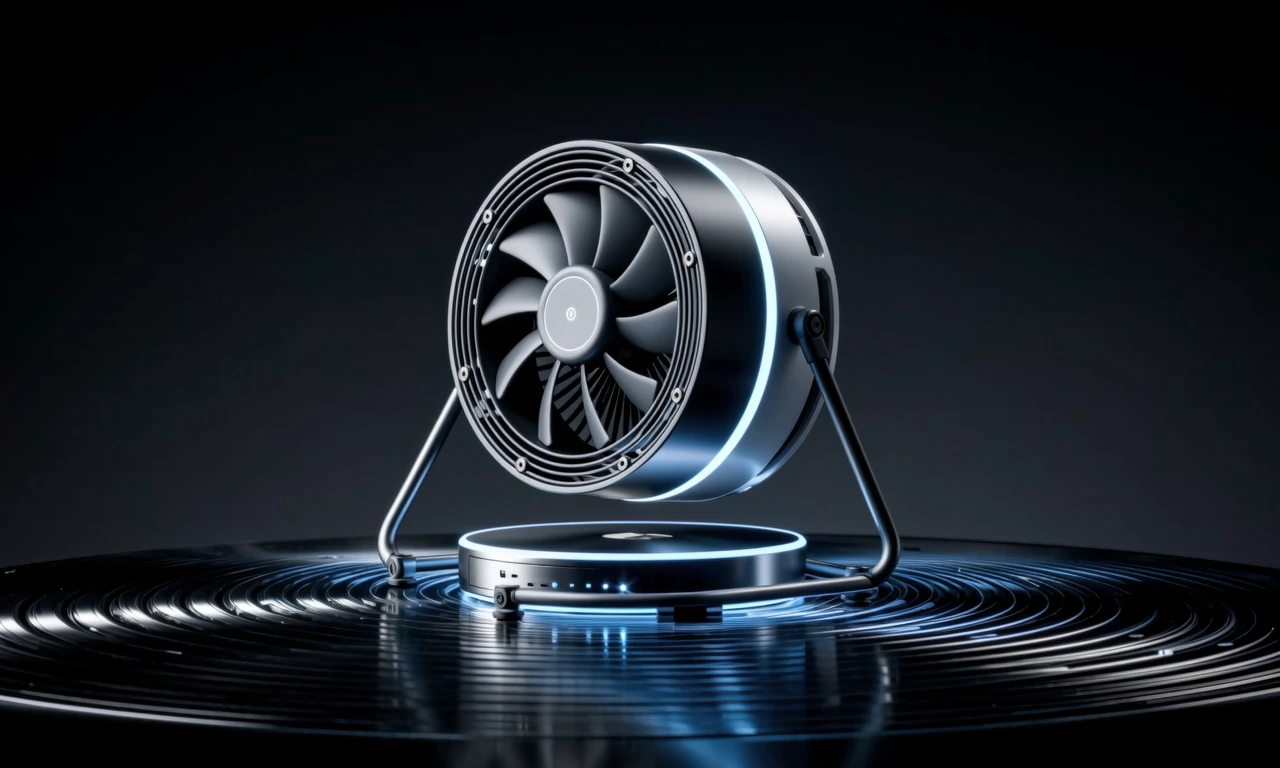
You know, when ASUS ROG announced their new STRIX XF120 fan with magnetic levitation technology claiming near-silent operation, I couldn’t help but wonder—how exactly does floating a fan make it quieter? It turns out the physics behind magnetic levitation noise reduction is fascinatingly simple yet brilliant. Traditional ball bearing fans create constant friction points where metal meets metal, generating that characteristic whirring and grinding noise we’ve all come to accept as normal computer background noise. Magnetic levitation essentially eliminates these friction points entirely by suspending the rotor in a magnetic field, creating what’s essentially a frictionless environment for the fan to operate in.
The Physics of Silent Operation
What’s really clever about magnetic levitation in cooling fans is how it addresses multiple noise sources simultaneously. Think about it—without physical contact between moving parts, you’re not just eliminating bearing noise, but also reducing vibration transmission throughout the entire system. The 360° magnetic levitation bearing in the XF120 creates a stable magnetic field that keeps the fan blades perfectly centered and balanced, preventing the kind of micro-vibrations that typically amplify noise in traditional fan designs. This is particularly noticeable at higher RPMs where conventional fans tend to get noticeably louder, while maglev fans maintain their acoustic profile.
I’ve seen some lab tests showing that magnetic levitation can reduce mechanical noise by up to 15dB compared to traditional sleeve bearings, which is pretty significant when you consider that every 3dB reduction represents about half the perceived loudness. The XF120’s claimed 22.5dB maximum noise level isn’t just marketing speak—that’s genuinely quieter than most library environments, and it’s largely achievable because magnetic levitation eliminates the main mechanical noise sources that plague conventional fan designs.
Another aspect people often overlook is how magnetic levitation contributes to long-term quiet operation. Traditional bearings wear down over time, developing play and imperfections that gradually increase noise levels. With magnetic levitation, since there’s no physical contact to cause wear, the fan should theoretically maintain its acoustic performance throughout its entire lifespan—which in the case of the XF120 is rated at an incredible 400,000 hours. That’s the kind of longevity that makes you appreciate how eliminating mechanical contact doesn’t just reduce immediate noise, but preserves acoustic quality over years of use.
The combination of magnetic levitation with other noise-reduction features like the precision-balanced blades and anti-vibration mounts creates what engineers call a “system-level” approach to acoustic optimization. It’s not just one feature working in isolation, but multiple technologies complementing each other to achieve that whisper-quiet operation that high-end PC builders crave. Honestly, after understanding the technology behind it, magnetic levitation seems less like a luxury and more like the future standard for anyone serious about silent computing.
Comment List (3):
Load More Comments Loading...