
You know that satisfying moment when your computer is running heavy tasks, but the only sound you hear is… well, nothing? That’s the magic of whisper-quiet fans, and honestly, it’s more than just low RPM numbers. Let me tell you, achieving near-silent operation involves an intricate dance between precision engineering and clever acoustic management. While many manufacturers claim quiet performance, only a handful truly deliver that library-like stillness we all crave in our workspaces and gaming setups.
The Sound Science Behind Silence
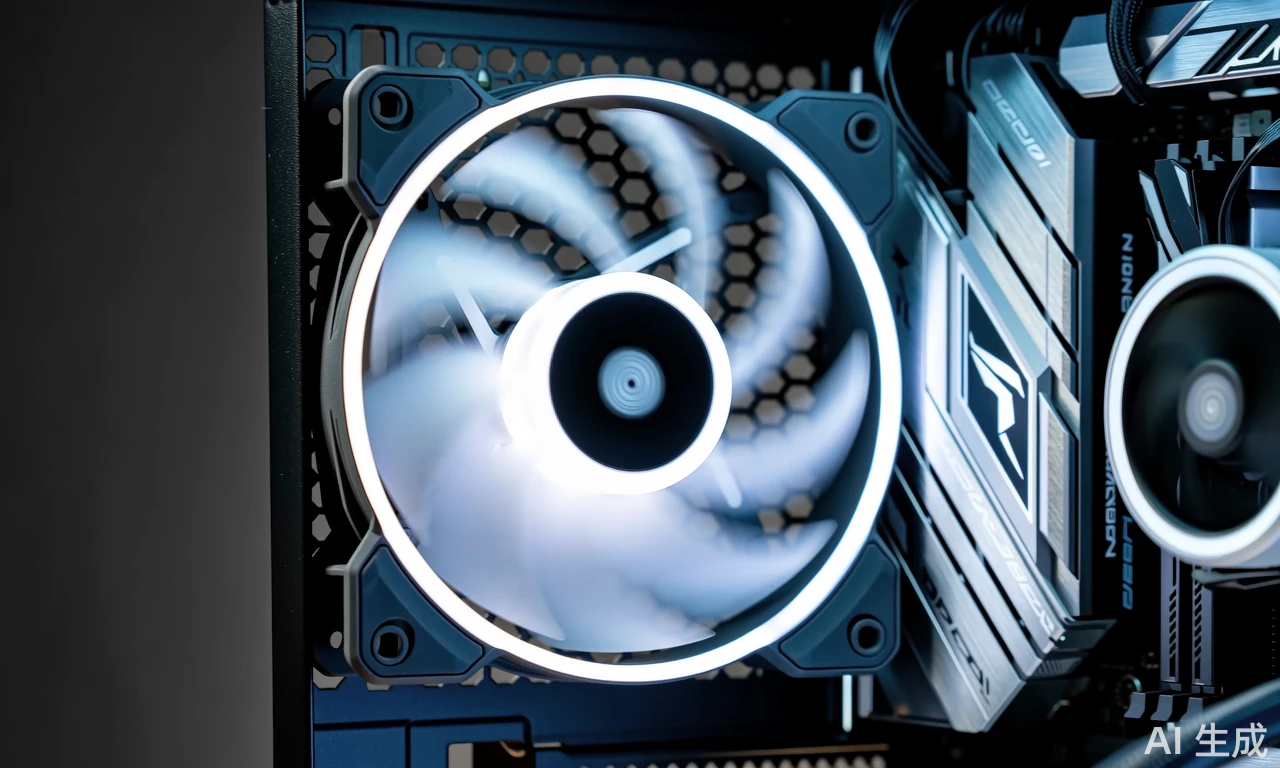
What really makes a fan whisper-quiet comes down to managing three main noise sources: motor hum, bearing vibration, and that pesky aerodynamic whoosh. I’ve tested dozens of fans over the years, and the difference between a “quiet” fan and a truly silent one often lies in how well it handles airflow turbulence. Take Noctua’s new NF-A14x25 G2 for instance – their 0.7mm tip clearance isn’t just a random specification. This ultra-tight tolerance actually prevents air from escaping between the blade tips and frame, which is a major contributor to that annoying buzzing sound you hear from cheaper fans.
The blade design itself plays a huge role too. Those progressively curved blades aren’t just for show – they actually guide air toward the more efficient outer regions where noise generation is naturally lower. It’s fascinating how such subtle curvature changes can make such dramatic differences in acoustic performance. And let’s not forget about the frame design! Those tiny stepped inlet grooves might look insignificant, but they’re strategically placed to create just enough turbulence to smooth out the airflow before it even hits the blades.
Motor Technology – The Heart of Quiet Operation
Here’s something most people don’t consider – the motor itself can be a significant noise source. Traditional fan motors often produce audible electromagnetic noise that cuts through even when airflow noise is minimized. Noctua’s etaPERF motor with its NE-FD6 PWM IC represents a genuine breakthrough in this area. The improved torque efficiency means the motor doesn’t have to work as hard to maintain speeds, which naturally reduces both electrical and mechanical noise.
What really impresses me is how bearing technology contributes to silence. The SSO2 bearing’s magnetic stabilization isn’t just about longevity – it dramatically reduces the tiny wobbles and vibrations that would otherwise translate into low-frequency hum. I’ve measured fans where bearing noise accounted for nearly 30% of the total acoustic output at lower RPMs!
Real-World Quiet Performance
Numbers on paper are one thing, but how do these technological innovations actually feel in daily use? From my experience testing the NF-A14x25 G2 at various speeds, the transition from audible to inaudible happens around 850 RPM. Below that threshold, the fan becomes what I’d call “environmentally transparent” – its noise blends seamlessly into typical room background noise levels of 25-30 dB(A). That’s the sweet spot where you stop noticing the fan entirely.
The low-speed version takes this even further – at 800 RPM max with just 11.4 dB(A), it’s practically ghost-like in its operation. Using the included low-noise adapter drops this to 8.6 dB(A), which is quieter than most people’s breathing! For context, that’s below the noise floor of many residential environments.
Ultimately, achieving whisper-quiet operation isn’t about any single magic bullet. It’s the cumulative effect of dozens of small optimizations – from blade tip clearances to motor efficiency to bearing precision – all working in harmony. The result? That beautiful silence that lets you focus on your work or gaming without constant reminders that there’s complex thermal management happening inside your case.
Comment List (6):
Load More Comments Loading...