
You know, when it comes to building a truly quiet PC, the cooling solution is often the biggest culprit when it comes to noise. I’ve been researching this for my own build recently, and it’s fascinating how much difference the right fan or cooler can make. While be quiet!’s Silent Wings 4 series, as mentioned in the article, is a strong contender, it’s important to remember that “quietest” is a relative term that depends heavily on your specific setup and cooling needs. Air cooling, all-in-one liquid coolers (AIOs), and custom loops all have their place in the noise spectrum, and what’s whisper-quiet for one person might still be noticeable to another.
The Air Cooling Contenders
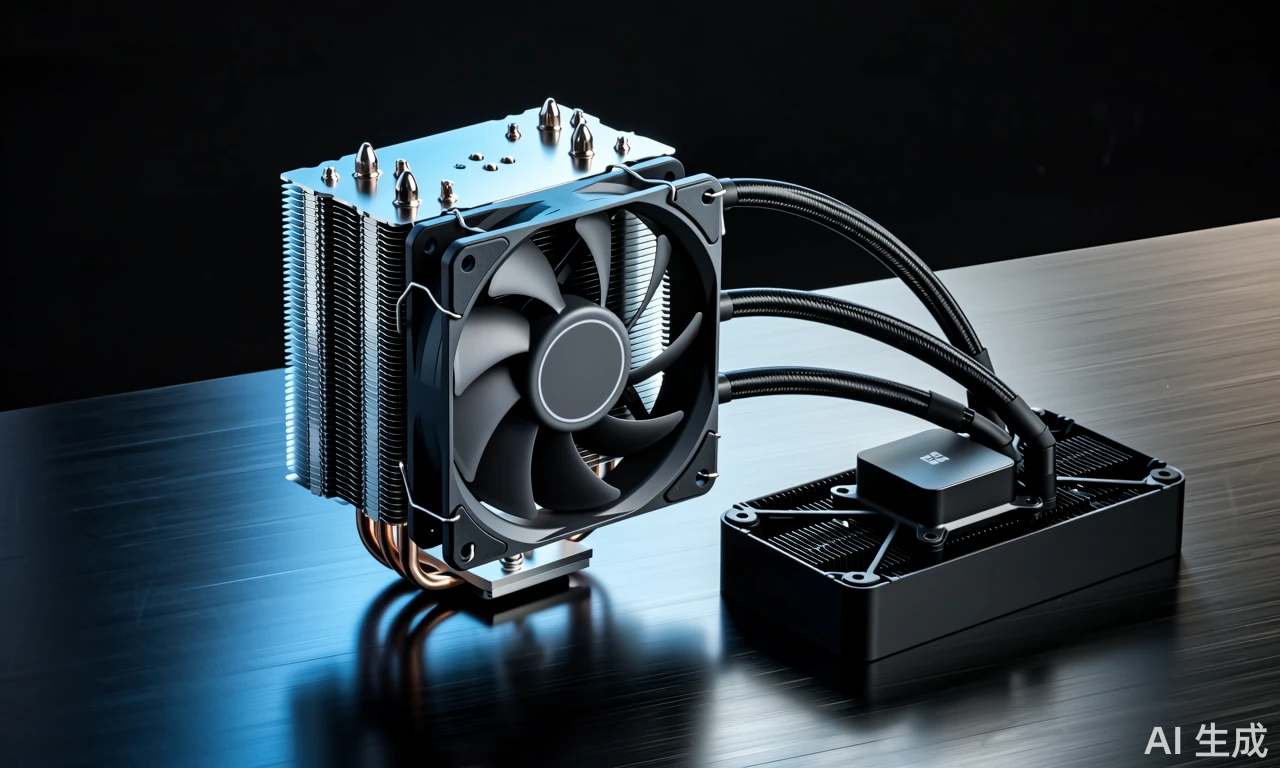
High-end air coolers from brands like Noctua and be quiet! are often praised for their acoustic performance. They don’t have pumps, which is one less potential source of noise. A massive heatsink with a large, slow-spinning fan – like the ones in the Silent Wings 4 series running at sub-1500 RPM – can dissipate a surprising amount of heat while staying incredibly quiet. I remember testing a Noctua NH-D15, and at idle, you literally had to put your ear next to the case to hear anything. The trade-off, of course, is sheer bulk, which can cause compatibility issues in smaller cases.
The Liquid Cooling Equation
Now, AIO liquid coolers are a different beast. Their biggest advantage is moving the heat away from the CPU socket quickly, allowing you to use larger radiators with more fans. This means you can run those fans at even lower speeds to achieve the same cooling performance. However, you introduce a pump into the mix. Early AIOs had notoriously whiny pumps, but modern ones from companies like Arctic (with their Liquid Freezer II series) and EKWB have made huge strides. At their best, a good 280mm or 360mm AIO can be quieter under load than a high-end air cooler because its radiator fans don’t have to spin as fast to dump the same amount of heat.
But here’s the catch – pump noise is a different kind of annoyance. It’s often a higher-pitched hum or buzz that some people find more intrusive than the low-frequency whoosh of air. So, while the overall decibel level might be lower, the quality of the sound is a huge factor in perceived quietness.
It’s Not Just About the Hardware
A crucial, and often overlooked, part of the puzzle is fan control. Seriously, you can buy the quietest fans in the world, but if your motherboard is blasting them at 100% speed all the time, they’ll still be loud. Setting up a custom fan curve in your BIOS or using software is essential. The goal is to keep fans at the lowest possible RPM that still provides adequate cooling. For most desktop tasks, that might be as low as 600-800 RPM, where even inexpensive fans become virtually silent. This is where the Silent Wings 4’s fluid dynamic bearing really shines, as it allows for very smooth operation at those ultra-low speeds without producing bearing noise.
So, which is the quietest? There’s no single winner. For ultimate silence in a standard ATX case, a premium air cooler with a focus on low-noise fans is hard to beat. But if you’re pushing an overclocked CPU and need peak performance without a jet engine, a high-quality, large-radiator AIO with a quiet pump might be your best bet. It all comes down to balancing your thermal demands with your personal tolerance for different types of noise. The good news is that with options like the Silent Wings 4, we’re getting closer than ever to achieving a truly silent, high-performance PC.
Comment List (10):
Load More Comments Loading...