
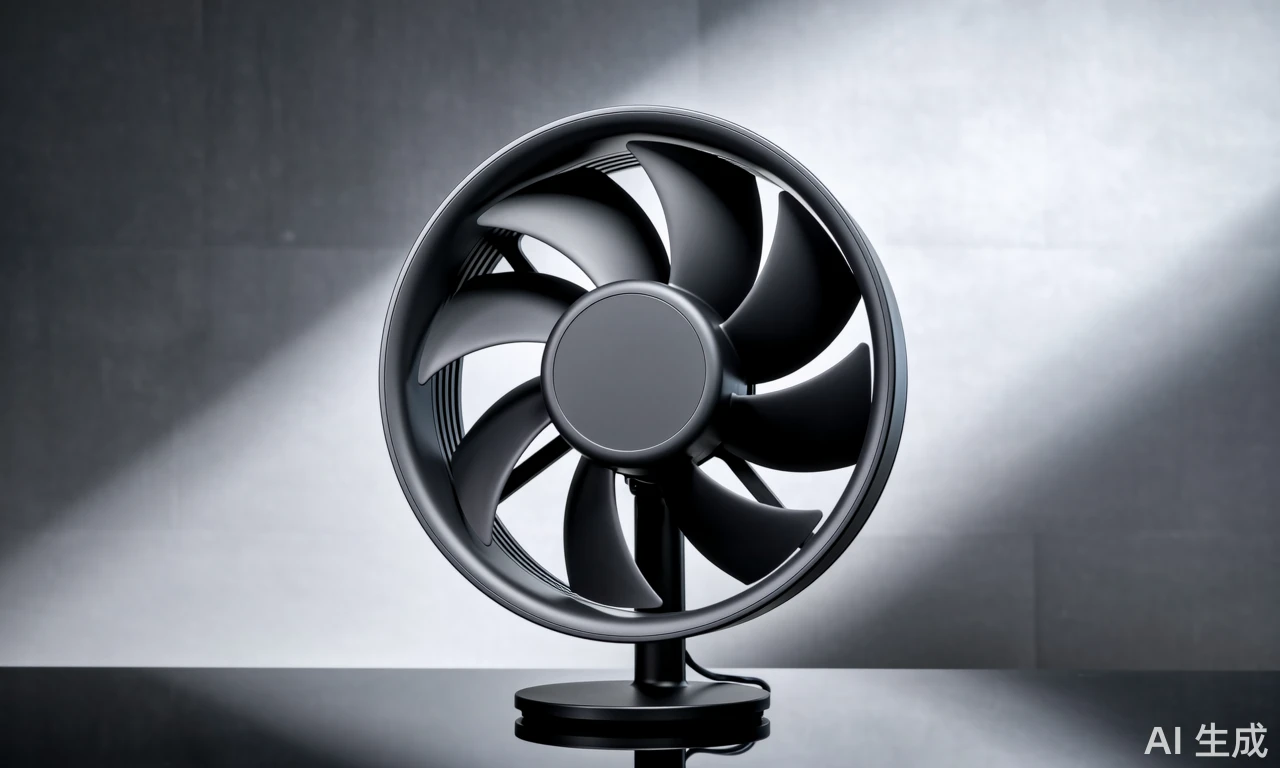
You know, when I first saw Noctua’s new round-frame fan, I had to wonder – what’s the real advantage of a circular design in a world dominated by square fans? It turns out there’s some brilliant engineering behind this seemingly simple choice. While most case fans come in standard square frames, the round-frame variant specifically addresses a critical issue in high-performance cooling: compatibility. Think about it – when you’re installing a massive air cooler like the NH-D15 G2, every millimeter counts. The round frame eliminates those frustrating corner interferences that can prevent proper mounting or create unwanted vibrations.
The Aerodynamic Advantage You Might Not Have Considered
What really surprised me was learning how the round frame contributes to better airflow physics. With that ultra-tight 0.7mm tip clearance Noctua achieved – significantly smaller than the typical 1mm or more in competing fans – the circular design allows for more consistent airflow patterns. Air doesn’t get trapped in corners or create turbulent eddies like it can with square frames. This isn’t just theoretical either; in practical terms, it translates to that impressive 155.6 m³/h airflow while keeping noise below 24.8 dB(A). That’s like having your cake and eating it too – maximum cooling with minimal noise!
Why This Matters for Real-World Cooling
Here’s the thing – most people don’t realize how much fan frame design affects their actual cooling performance. I’ve seen too many builds where enthusiasts struggle with fitment issues or unexpected turbulence noise. The round-frame solution isn’t just about making installation easier; it’s about optimizing the entire airflow pathway. When you combine this thoughtful frame design with Noctua’s advanced Sterrox LCP blades and that clever AAO frame technology, you get a fan that works with physics rather than against it. And honestly, isn’t that what premium cooling should be about?
The beauty of this approach becomes especially apparent in push-pull configurations. Noctua’s dual-fan package with its speed offset design shows they’ve thought through everything – by running one fan at 1475 RPM and another at 1525 RPM, they prevent those annoying acoustic beat frequencies that can ruin an otherwise quiet build. It’s these subtle engineering choices that separate good cooling from truly exceptional cooling.
At the end of the day, choosing a round-frame fan isn’t just about following a trend – it’s about recognizing that sometimes, the most effective solutions come from rethinking basic assumptions. For CPU cooler compatibility and optimized airflow dynamics, the circular design proves that in the world of PC cooling, sometimes going round really does come full circle to better performance.
Comment List (11):
Load More Comments Loading...