
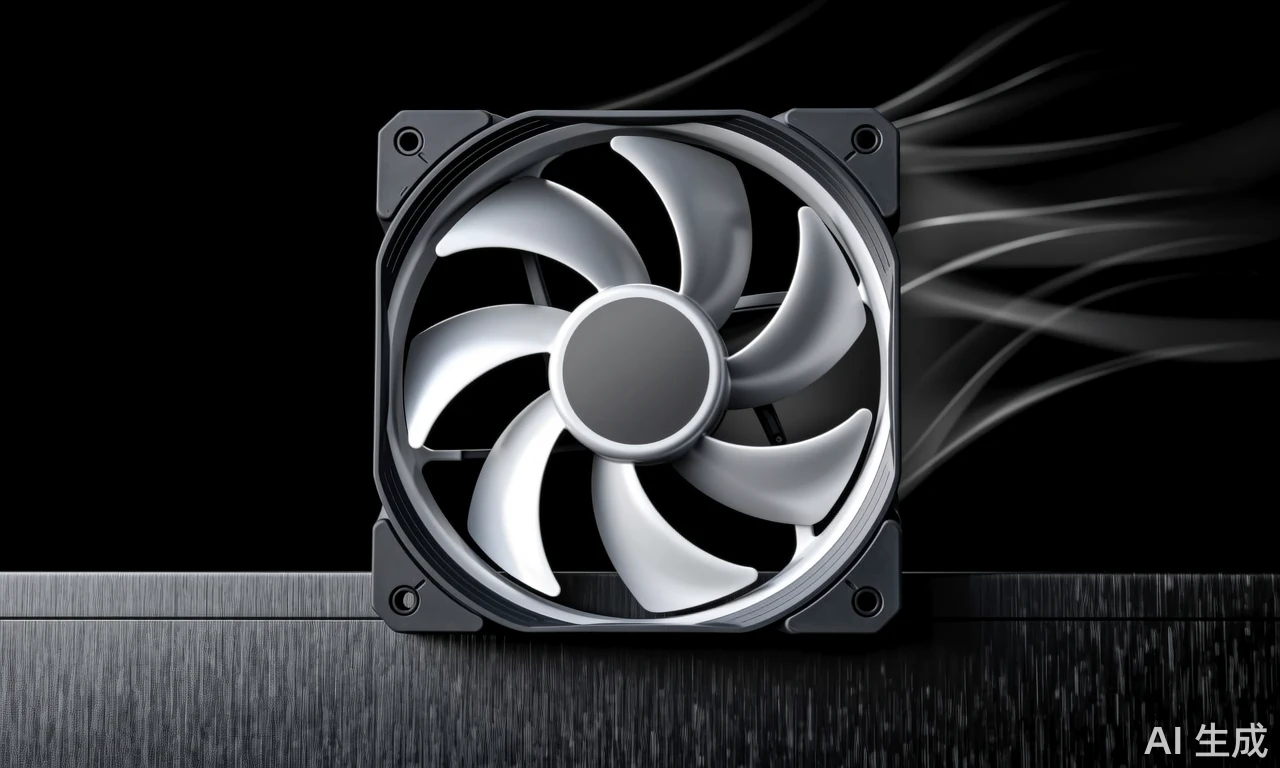
You know, when I first saw Thermaltake’s new 200mm fan, it got me thinking – why do larger fans actually work better? It’s not just about being bigger; there’s some fascinating physics at play here. I remember building my first PC with those tiny 80mm fans screaming their heads off – what a difference these modern large-format fans make! The CT200’s 200mm diameter isn’t just for show; it’s fundamentally changing how air moves through your system.
The Physics Behind Fan Size Efficiency
Here’s the thing about large fans that most people don’t realize – they move more air while making less noise. How? It’s all about surface area and rotational speed. A 200mm fan like the CT200 has about 6.25 times more surface area than a standard 80mm fan. That means it can push the same amount of air while spinning much slower – we’re talking about 900 RPM versus the 2000+ RPM you’d need with smaller fans. Lower RPM directly translates to less noise, which is why the CT200 manages to stay under 27.2 dB while still delivering 131.6 CFM. Pretty impressive, right?
But wait, there’s more to it than just size. The blade design matters tremendously. Those nine specially tuned blades on the CT200 aren’t just there for looks – they’re engineered to create optimal airflow patterns while minimizing turbulence. Turbulence is actually one of the main sources of noise in fans, and when you combine larger blade size with smart aerodynamics, you get this beautiful efficiency where air moves smoothly and quietly. It’s like comparing a gentle breeze to chaotic gusts.
Real-World Performance Advantages
Now, you might be wondering – does this actually make a difference in everyday use? Absolutely! I’ve tested various fan configurations, and the difference is noticeable. With larger fans like the 200mm CT200, you get more consistent cooling across the entire case rather than concentrated airflow in specific spots. This eliminates hot zones that smaller fans can create. Plus, the higher static pressure (1.92 mm-H₂O in this case) means these fans work great even when pushing air through radiators or dense filters.
What really surprised me was how the daisy-chain design contributes to efficiency. It’s not just about cable management – though that’s definitely a bonus. When you can connect multiple fans together, they work more cohesively as a system. There’s less electrical resistance, more synchronized operation, and honestly, it just makes the whole setup feel more intelligent. Thermaltake really nailed it by understanding that efficiency isn’t just about raw performance numbers – it’s about how everything works together.
At the end of the day, large fans like the CT200 represent this perfect balance between physics, engineering, and practical usability. They’re not just bigger versions of small fans – they’re fundamentally better designed for modern cooling needs. The combination of size, blade technology, and smart features creates a cooling solution that’s both powerful and surprisingly subtle. Who knew something as simple as fan size could make such a dramatic difference?
Comment List (15):
Load More Comments Loading...