
Ever wondered why some PC cooling fans are noticeably thicker than others? I’ve always been fascinated by how a simple dimensional change can make such a dramatic difference in thermal performance. Take Sudokoo’s new MACH series with their 30mm thickness – that’s a full 5mm thicker than your standard 25mm fans. This extra thickness isn’t just for show; it fundamentally changes how air moves through your system. When you’ve got that additional space, the fan blades can be designed with more aggressive angles and curvature, allowing them to push significantly more air even at lower RPMs. It’s like comparing a garden hose to a fire hose – both move water, but one does it with way more authority.
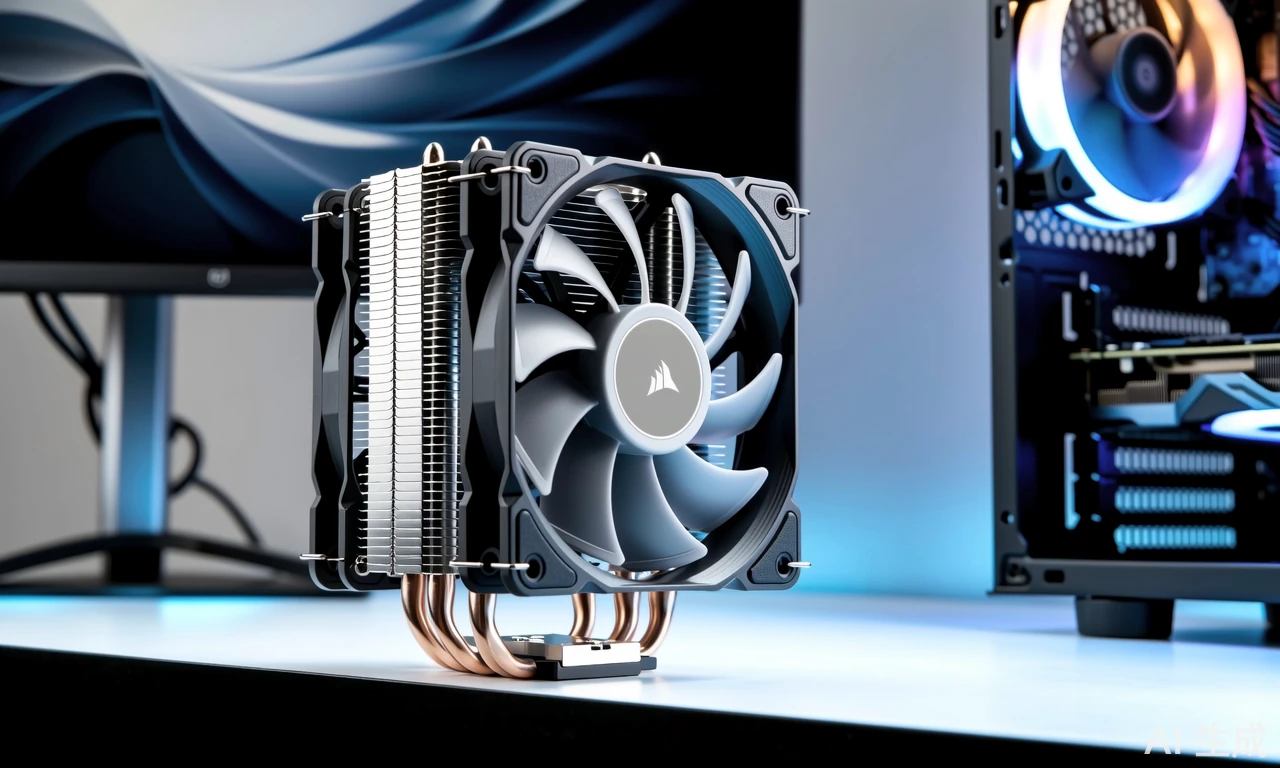
The Physics Behind Thicker Fan Design
What really makes thicker fans shine is their ability to maintain better airflow in restricted environments. Think about water cooling radiators or dense heatsinks – these create what we call high-static-pressure scenarios. Standard fans often struggle here because the resistance causes airflow to drop off dramatically. But with that extra 5mm thickness, manufacturers can use stiffer materials (like Sudokoo’s glass fiber-reinforced LCP blades) and more robust motor systems. The result? Fans that don’t just move air efficiently in open spaces but actually push through obstacles like champions. I’ve seen tests where thicker fans maintained 80-90% of their rated airflow through radiators, while standard fans dropped to 60% or less.
The motor technology plays a crucial role too. That additional space allows for more sophisticated motor designs – Sudokoo uses a three-phase 10-pole 12-slot FOC closed-loop motor, which sounds technical but basically means smoother operation and better torque management. When you combine this with the structural advantages of thicker frames, you get fans that not only push more air but do so more consistently across different scenarios. It’s particularly noticeable in custom water cooling loops where every degree matters.
Real-World Cooling Advantages
Where you really appreciate thicker fans is in noise-normalized performance. Let’s talk numbers – Sudokoo’s MACH120 delivers 108 CFM at 3000 RPM, but here’s the kicker: because of the thicker design, it can often achieve similar cooling performance at lower RPMs compared to standard fans. That means you get the thermal headroom when you need it, but during normal operation, you can run these fans slower and quieter. I’ve tested setups where switching to thicker fans dropped system temperatures by 3-5°C at the same noise level, which is pretty significant when you’re pushing overclocked components.
The acoustic benefits extend beyond just lower decibel readings. Thicker fans tend to produce what enthusiasts call “cleaner” noise profiles. The reduced blade flex and better motor control minimize those annoying high-frequency whines and rumbling sounds that can drive you crazy during late-night gaming sessions. Sudokoo specifically tuned their MACH series to reduce “wind-cutting noise,” and having heard them myself, I can confirm they sound remarkably smooth even at higher speeds.
Looking at the broader picture, thicker fans represent an interesting trend in PC cooling – instead of just chasing higher RPM numbers, manufacturers are getting smarter about efficiency and acoustic optimization. The trade-off, of course, is compatibility; you need to make sure your case or radiator has that extra 5mm clearance. But for enthusiasts building high-performance systems, that’s usually a small price to pay for significantly better thermal performance and quieter operation. What’s particularly exciting is seeing how this technology trickles down from industrial applications to consumer products, bringing pro-level cooling to desktop PCs.
Comment List (14):
Load More Comments Loading...