
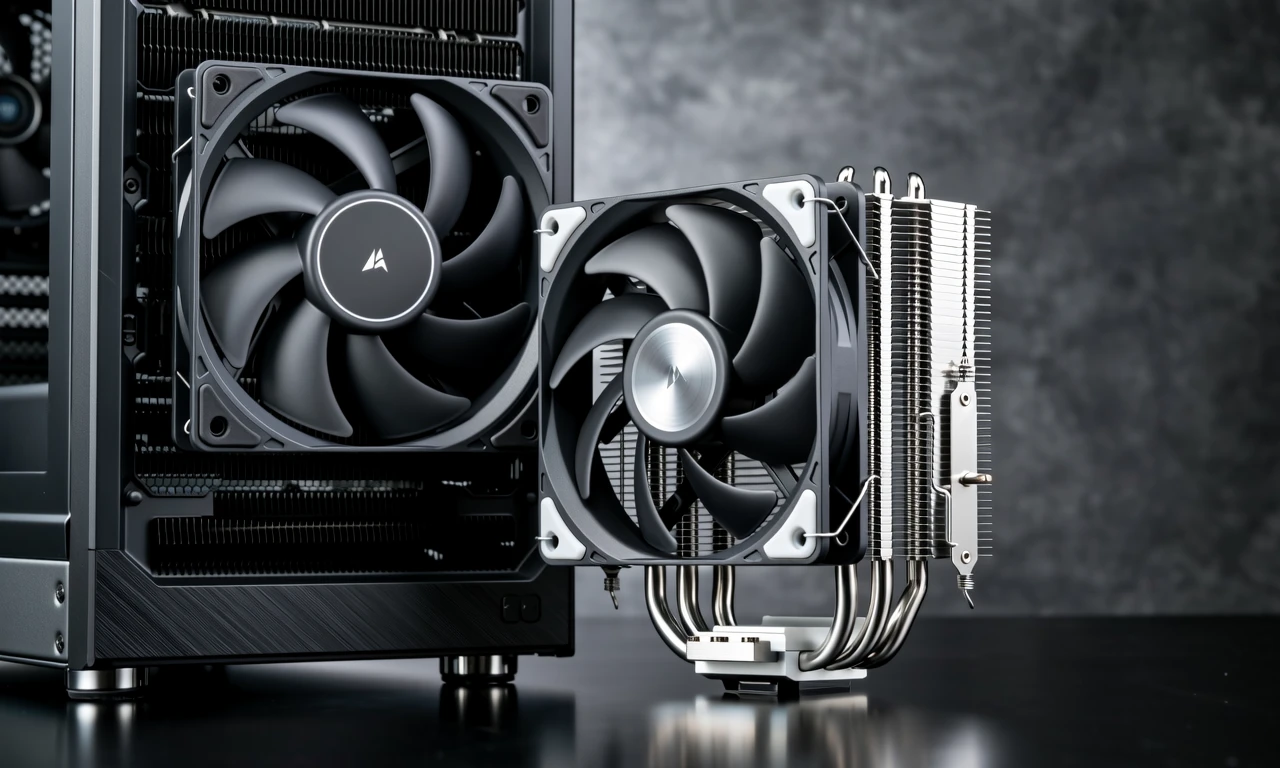
You know, when it comes to PC cooling, it’s tempting to think that bigger is always better. I mean, who wouldn’t want a massive fan that promises to move more air with less noise? But then SilverStone comes along with their Shark Force 160 ARGB fan, and it really makes you stop and think. This clever piece of engineering squeezes a 160mm impeller into a 140mm mounting frame, delivering up to 160 CFM airflow while fitting standard case configurations. It’s fascinating how they’ve managed to create this hybrid solution that gives you the benefits of a larger fan without forcing you to buy a new case. But does this mean larger fans are automatically superior for cooling? Well, the answer isn’t as straightforward as you might think.
The Physics Behind Fan Size and Cooling Efficiency
Here’s something interesting I’ve noticed – larger fans can move more air while spinning slower, which typically means quieter operation. The Shark Force 160 operates at just 1,600 RPM but still pushes 160 CFM, thanks to that massive surface area. However, bigger isn’t always the magic solution. I’ve seen cases where oversized fans actually perform worse in tight spaces because they struggle to build proper air pressure. The Shark Force gets around this with its textured blades inspired by shark skin – now that’s some clever biomimicry! These elongated blades are designed to guide airflow more efficiently while reducing noise, though some users have reported noticeable vibration at higher speeds. It’s this kind of real-world performance that reminds us there’s more to cooling than just fan dimensions.
When Bigger Might Not Be Better
Looking at the actual test results for the Shark Force 160 ARGB reveals something pretty telling – independent measurements showed 148.3 CFM instead of the claimed 160 CFM. That’s still impressive, but it shows how real-world performance can differ from laboratory specs. What really matters is how the fan performs in your specific setup. If you’re working with limited clearance or need high static pressure for radiator mounting, sometimes multiple smaller fans might actually serve you better. I remember building a compact system where a single large fan just couldn’t create the directional airflow I needed, while two smaller fans in push-pull configuration worked wonders. The key is matching your cooling solution to your specific thermal requirements and case constraints.
Finding the Right Balance for Your Setup
What I love about innovations like the Shark Force 160 is how they challenge our assumptions about PC cooling. At 119 RMB in the Chinese market, it offers a compelling middle ground for enthusiasts who want large-fan performance without case compatibility headaches. But here’s the thing – you need to consider your entire cooling ecosystem. That includes case design, component layout, and even ambient room temperature. Sometimes the sweet spot might be combining different fan sizes strategically rather than just going for the biggest option available. After all, effective cooling isn’t just about moving the most air – it’s about moving the right air to the right places at the right time.
Comment List (13):
Load More Comments Loading...