
Choosing the right cooling fan can feel overwhelming with so many options on the market, but honestly, it’s one of those components where a little knowledge goes a long way. You don’t always need the flashiest RGB-lit fan – sometimes what matters most is how effectively it moves air while keeping noise levels tolerable. Take Thermaltake’s new TOUGHFAN 12 Pro as an example – it’s specifically engineered for users who prioritize performance over aesthetics, featuring advanced LCP blades and precision engineering that minimizes noise without sacrificing airflow. But how do these technical specs translate to your actual needs? That’s what we need to figure out.
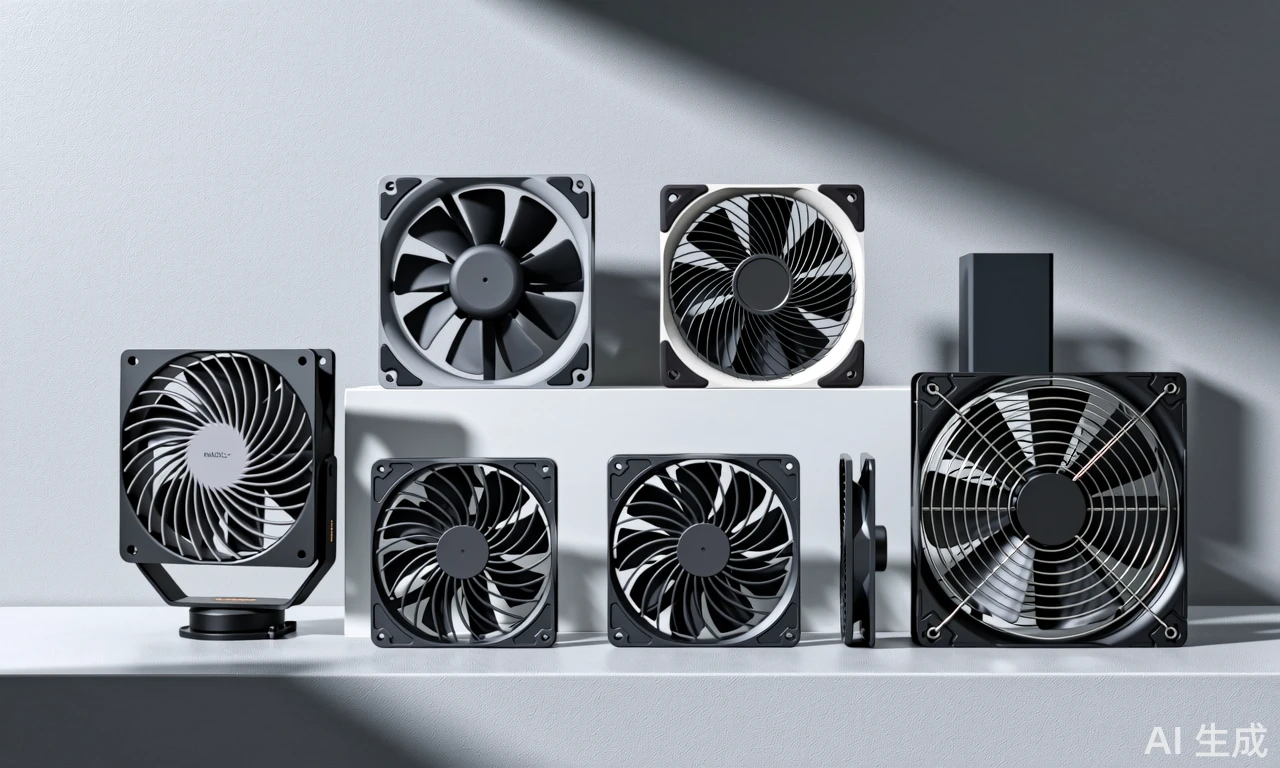
Understanding Your Cooling Requirements
Before even looking at specifications, you’ve got to ask: what exactly am I cooling? A high-end gaming rig with overclocked components demands completely different airflow characteristics than a quiet office PC or a compact mini-ITX build. I’ve seen people make the mistake of buying fans based solely on looks or brand reputation, only to discover they’re either too loud for their needs or don’t provide enough static pressure for their radiator setup. For CPU air coolers or case ventilation, you typically want good airflow (measured in CFM), but when it comes to radiators or heatsinks with dense fin arrays, static pressure becomes the king – that’s why the TOUGHFAN 12 Pro’s 3.19 mm-H2O rating matters so much for liquid cooling setups.
The Noise vs Performance Balance
Here’s where things get interesting – and personal. Some people can tolerate fan noise up to 35 dB-A, while others get annoyed by anything above 20 dB-A. Amazingly, the TOUGHFAN 12 Pro manages to deliver 70.8 CFM at just 22.6 dB-A, which is pretty impressive when you consider that many competitors struggle to stay below 30 dB-A at similar performance levels. What’s even more fascinating is their L.N.C (Low Noise Cooling) feature that drops noise to 18.3 dB-A – that’s quieter than most library environments! But here’s the catch: you do sacrifice some performance (airflow drops to 49.13 CFM), so you need to decide what matters more for your specific situation.
Bearing type is another factor that often gets overlooked. Hydraulic bearings, like the Gen.2 version in the TOUGHFAN 12 Pro, tend to offer better longevity and quieter operation compared to sleeve bearings, especially in PWM-controlled setups where fans constantly adjust their speed. The 40,000-hour lifespan means you won’t be replacing these fans anytime soon – that’s nearly 5 years of continuous operation!
Practical Considerations Beyond Spec Sheets
Specifications only tell part of the story. I’ve learned through experience that little details make a huge difference in real-world usage. Those anti-vibration silicone pads on the TOUGHFAN 12 Pro? They’re not just marketing fluff – they genuinely prevent resonance from transferring to your case, which can otherwise amplify noise significantly. And that 0.6mm tip clearance between blades and frame? It might sound trivial, but it’s precisely this kind of engineering that separates premium fans from budget options by reducing turbulent noise and improving efficiency.
PWM control is another feature worth paying attention to, especially if you’re building a system that needs to adapt to different workloads. The ability to smoothly ramp from 500 to 2,000 RPM based on temperature readings means your system stays quiet during light tasks but kicks into high gear when you’re gaming or rendering. It’s frustrating when fans constantly cycle between loud and quiet – good PWM implementation prevents exactly that.
At the end of the day, choosing cooling fans comes down to matching technical capabilities with your specific use case and personal preferences. Whether you’re building a silent workstation, a high-performance gaming rig, or anything in between, understanding these nuances will help you make an informed decision rather than just following the crowd. After all, the best fan isn’t necessarily the most expensive one – it’s the one that perfectly balances your need for cooling performance with your tolerance for noise.
Comment List (8):
Load More Comments Loading...