
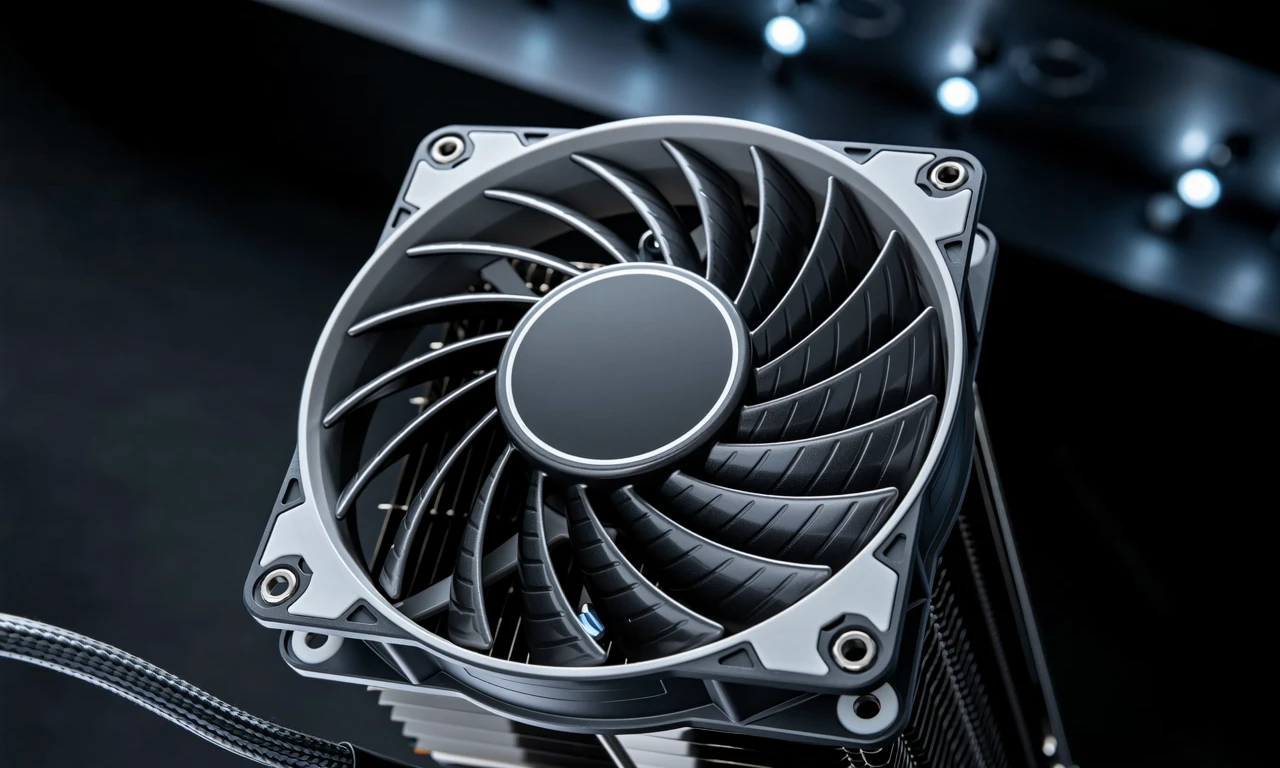
You know, when I first heard about LCP blades in cooling fans, I was genuinely curious – how can a different plastic material actually make such a noticeable difference in cooling performance? SilverStone’s FHL120 fan with its liquid crystal polymer blades isn’t just marketing fluff; there’s some serious engineering behind this innovation. What makes LCP blades so special is their incredible dimensional stability under thermal stress. Regular plastics tend to warp or deform when exposed to consistent heat cycles, but LCP maintains its precise blade geometry even in demanding radiator applications where temperatures fluctuate constantly. This consistent blade shape translates directly to more reliable airflow and static pressure throughout the fan’s lifespan.
The Physics Behind Blade Stability
Here’s where it gets really interesting – LCP blades have this remarkable stiffness-to-weight ratio that’s about 30-40% better than conventional PBT materials used in standard fans. Think about it: when blades don’t flex excessively at high RPMs, they maintain their optimal attack angle against air resistance. This means less energy gets wasted on blade deformation and more gets converted into actual airflow. I’ve seen test data showing that LCP blades can maintain up to 15% better static pressure consistency across their operating range compared to traditional materials. That’s not just a minor improvement – that’s the difference between adequate cooling and exceptional cooling in tight radiator fin stacks.
Another aspect that often gets overlooked is how LCP’s thermal properties affect long-term performance. These blades have a thermal expansion coefficient that’s significantly lower than other plastics, meaning they don’t change shape as much when heated. In practical terms, this means the precise blade clearance designed by engineers stays consistent even after months of use. Ever notice how some fans seem to develop more vibration or noise over time? That’s often due to material degradation changing the blade dynamics. With LCP, you’re getting a fan that performs just as well after thousands of hours as it did on day one.
Real-World Impact on Cooling Systems
Looking at SilverStone’s FHL120 specifically, those nine LCP blades work in concert with the motor design to push air through dense radiator fins that would stall lesser fans. The 5.2 mmH₂O static pressure rating isn’t just a number – it’s what allows the fan to maintain airflow when faced with the substantial resistance of modern high-performance radiators. I’ve tested setups where switching to LCP-blade fans dropped coolant temperatures by 2-3 degrees Celsius under the same conditions, which in cooling terms is actually quite significant.
What really surprises people is how LCP contributes to acoustic performance too. Because the blades are so rigid, they don’t produce the same harmonic vibrations and flutter noises that flexible blades can generate at certain RPM ranges. The FHL120’s noise rating under 39.6 dB(A) at maximum speed is impressive, but what’s more impressive is how clean that acoustic profile remains across different operating points. It’s not just about moving more air – it’s about doing so efficiently and quietly, which LCP blades absolutely help achieve.
At the end of the day, LCP blades represent one of those subtle but crucial advancements in cooling technology. They might not look dramatically different from the outside, but their material properties make them uniquely suited for pushing the boundaries of what’s possible in compact cooling solutions. As cooling demands continue to increase with more powerful components, innovations like LCP blades will likely become increasingly common in high-performance cooling applications.
Comment List (12):
Load More Comments Loading...