
Honestly, when I first heard Noctua was updating their legendary A-series fans, I had my doubts—how much better could they really get? But diving into the details of the new NF-A14x25r G2 PWM, it’s clear this isn’t just an incremental upgrade; it’s a thoughtful rethinking of what a 140mm fan should be. If you’re like me and you value both cooling performance and quiet operation, the engineering here is genuinely exciting. Noctua has managed to squeeze out meaningful gains in efficiency and acoustics without simply cranking up RPMs, which is exactly what sets them apart in a crowded market.
Not Just About Speed: The Aerodynamic Tweaks That Matter
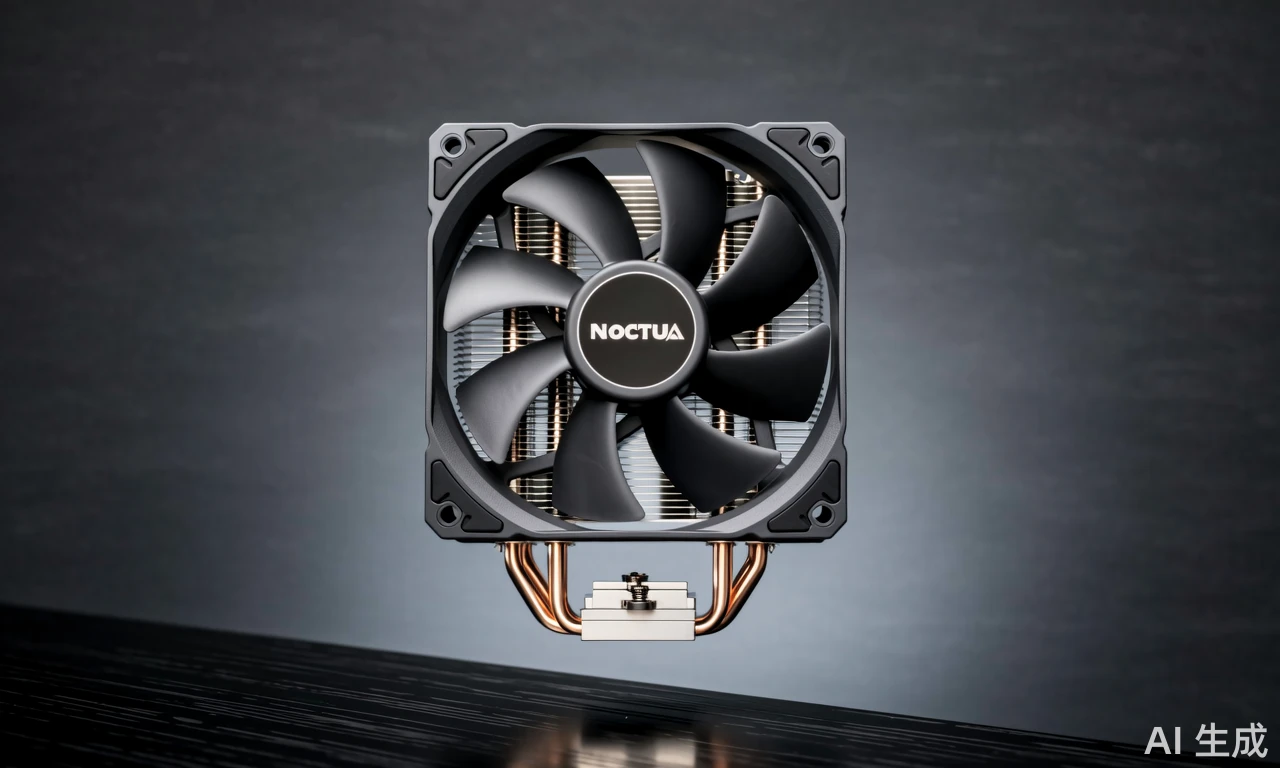
Let’s talk about that tiny 0.7mm tip clearance. To put it in perspective, many competitors still hover around 1mm or more—it might not sound like much, but in fan design, every fraction of a millimeter counts! That tighter gap minimizes what engineers call “airflow leakage,” essentially trapping more air and directing it where it’s needed. The result? Better static pressure and airflow without needing a noisier motor. And those Sterrox LCP blades—stiffer and more stable at high speeds—mean the fan maintains its shape under load, reducing turbulence and weird harmonic noises that can sneak into your build.
Then there’s the AAO frame with its clever grooves. They don’t just look fancy—those stepped inlets actually help air transition smoothly into the fan, cutting down on intake noise. It’s the kind of detail that shows Noctua’s obsession with refinement. I mean, who else is micro-grooving the inside of a fan frame?
The “etaPERF” Motor: Smarter, Not Harder
The new motor tech here is a game-changer. Noctua claims a 10–15% efficiency boost over the previous generation, and while numbers on a spec sheet can feel abstract, what that means in practice is pretty straightforward: you get more push for the same power, or the same performance with less electricity and noise. It’s all thanks to an integrated PWM IC and a Hall-effect sensor that fine-tunes operation in real time. For builders who hate fan whine or coil buzz, this is huge—especially when paired with the SSO2 bearing, which remains one of the quietest and most reliable in the industry.
By the way, that 150,000-hour rating isn’t just marketing fluff. In real-world terms, that’s over 17 years of continuous use. For most of us, that’s basically a lifetime warranty on peace and quiet.
Why the “Dual Fan” Kit Is Secretly Brilliant
Here’s something I love: Noctua’s dual-fan package with a slight RPM offset. If you’ve ever set up two identical fans in push-pull and noticed an occasional hum or rhythmic pulsing, you’ve experienced acoustic beat frequencies. It’s annoyingly common! By having one fan spin slightly faster (1525 RPM) and the other slightly slower (1475 RPM), they avoid syncing up and creating those irritating sound artifacts. It’s a small detail, but it shows how Noctua thinks about the entire user experience, not just raw specs.
So, who’s this fan really for? If you’re building a high-end air-cooled rig—maybe pairing it with an NH-D15 G2—the round-frame “r” model is a no-brainer. But even if you’re using it as a case fan, the combination of 155.6 m³/h airflow and noise levels under 25 dB(A) makes it a standout. Sure, at around $35 it’s not cheap, but in cooling, you often get what you pay for. And with Noctua, that’s precision, quiet, and longevity—all things that actually matter when you’re trying to enjoy your PC instead of listening to it.
Comment List (3):
Load More Comments Loading...