
You know, I’ve always wondered why some high-performance fans stick with that square-frame design while others go for the rounded look. After digging into Noctua’s latest release, it’s becoming clearer why that square shape isn’t just about aesthetics. When you look at the NF-A14x25 G2 PWM, its square frame actually plays a crucial role in maximizing airflow efficiency, especially when mounted against heatsinks or radiators. That tight 0.7mm tip clearance they’ve achieved? It’s something that would be much harder to implement effectively in a round-frame design. The square edges create a better seal against mounting surfaces, minimizing air leakage and ensuring that every bit of airflow is directed where it’s needed most.
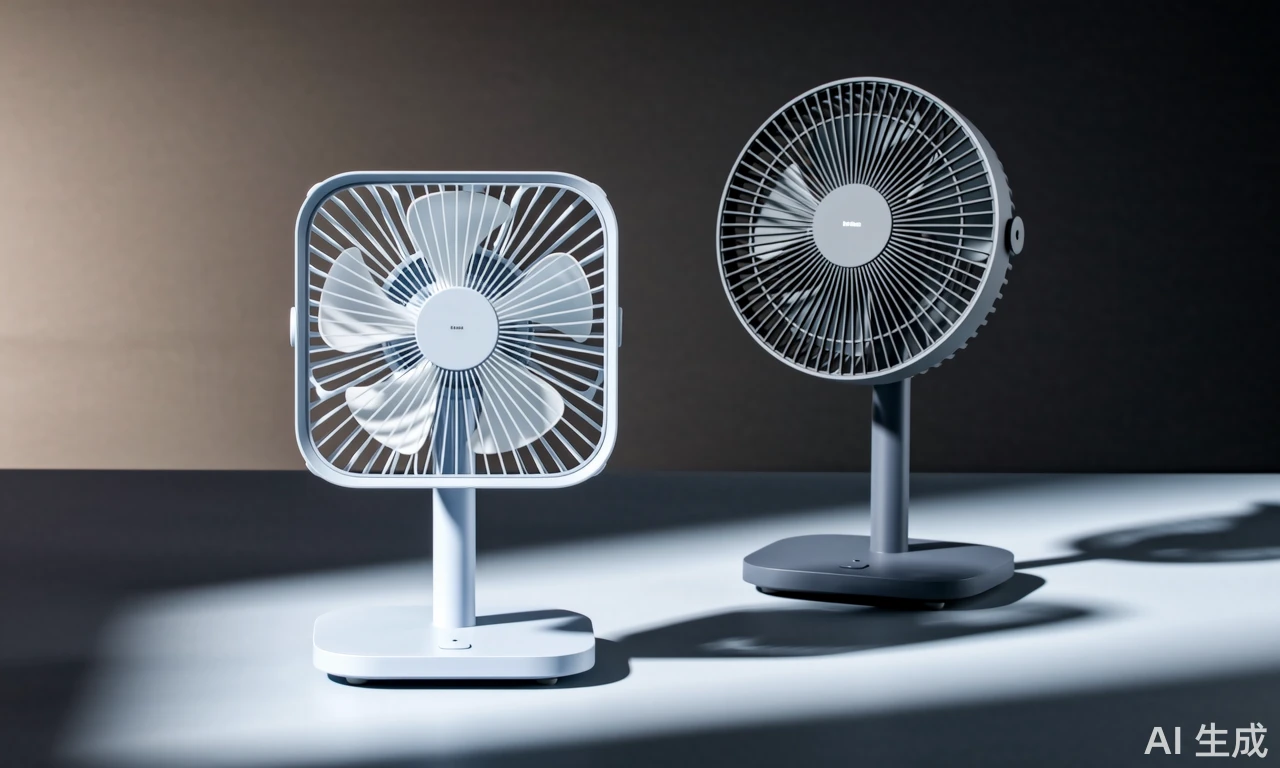
What’s really fascinating is how the square frame interacts with Noctua’s AAO (Advanced Acoustic Optimization) technology. Those stepped inlet grooves and micro-grooves on the inner surface work in harmony with the square shape to manage airflow patterns more effectively. I mean, think about it – when air enters a square-frame fan, the corners actually help guide the airflow more predictably toward the blade tips, where most of the work gets done. This might explain why Noctua’s square-frame version can deliver 155.6 m³/h airflow while keeping noise below 24.8 dB(A) – numbers that are pretty impressive for a 140mm fan.
The Physics Behind Square-Frame Efficiency
The efficiency advantage of square-frame fans becomes particularly noticeable in constrained environments. When you’re dealing with tight spaces in PC cases or dense radiator fins, that square shape provides more usable blade area compared to round frames of the same nominal size. It’s like getting a slightly larger fan in the same physical space! And let’s be real – in today’s compact PC builds, every millimeter counts. The NF-A14x25 G2’s ability to maintain performance at medium-low speeds around 1000 rpm is partly thanks to this design choice, as the square frame helps maintain consistent airflow patterns even at reduced RPMs.
But here’s something that surprised me – the square frame isn’t just about raw performance numbers. It actually contributes to better noise characteristics too. By providing a more stable mounting platform and reducing vibrations, the rigid square structure helps minimize those annoying resonance frequencies that can sometimes plague round-frame fans at certain RPM ranges. Noctua’s dual-fan package with its speed offset design takes this even further, demonstrating how square frames can be optimized for multiple fan configurations without suffering from acoustic interference issues.
Looking at the broader market, it’s interesting to note that while round-frame fans might look more traditional, square frames have become the go-to choice for performance-oriented applications. The industry seems to have settled on this design for good reason – better static pressure characteristics, improved compatibility with various mounting scenarios, and overall more efficient airflow management. Sure, you might sacrifice a tiny bit of that “classic fan look,” but when you’re getting this level of performance and quiet operation, it’s a trade-off most enthusiasts are willing to make.
Comment List (11):
Load More Comments Loading...