

What the Stratus 120 White PWM ARGB is
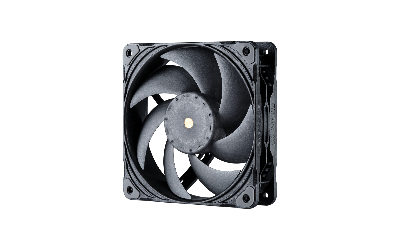
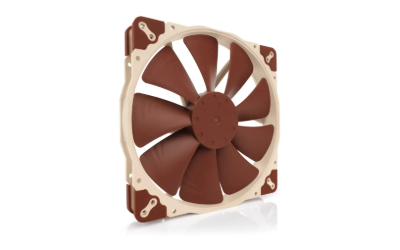
The Endorfy Stratus 120 White PWM ARGB is a 120mm by 25mm PWM case fan with addressable RGB lighting, sold in white. Endorfy’s own published specification lists a range of 200 to 1400 RPM. That is the whole of the performance envelope the maker discloses: no airflow figure in cubic metres per hour or cubic feet per minute, no static pressure in millimetres of water, no acoustics rating, no bearing type, no rated lifetime. For a fan sold as a retail part, that is a thin sheet, and it matters for how the fan should be bought.
Context first, because it explains the product. Endorfy is the Polish company Cooling Sp. z o.o., based at Sokołowska 24 in Sokołów outside Warsaw. Until late 2022 it sold under two names: SilentiumPC for cases and cooling, SPC Gear for peripherals. The Fortis and Spartan air coolers and the Gladius, Regnum and Signum cases that older European builds used are the same company’s work. The Stratus is not a new design direction; it is the fan Endorfy fits to its own chassis. The Signum 400 ships with four of them. Retail availability is the newer development, and this white PWM ARGB version is the one that has appeared on general retail listings.
This is a fan for someone building in a white case who wants lighting that the motherboard controls, and who is buying the fan as part of a set rather than as a single optimised component. It is not aimed at someone matching a fan to a dense radiator or chasing a noise target.
Specs at a glance
| Spec | Value |
|---|---|
| Model | Stratus 120 White PWM ARGB |
| Brand | Endorfy |
| Size | 120 mm |
| Thickness | 25 mm |
| Speed | 200–1400 RPM |
| Connector | 4-pin PWM + 5V 3-pin ARGB |
| Lighting | ARGB |
| Colour | White |
What the numbers mean
Airflow and static pressure are the two quantities that describe a fan, and they trade against each other. A fan with wide, shallow-pitched blades and generous tip clearance moves a large volume of air against almost no resistance. A fan with tighter tip clearance, a steeper blade angle and a higher hub-to-blade ratio pushes air through a restrictive medium, such as a radiator fin stack or a dense dust filter, at the cost of raw volume in free air. Static pressure is the number that predicts performance through obstruction; airflow predicts performance in open space.
Endorfy publishes neither for the Stratus. What the spec does give is the ceiling: 1400 RPM. That is a modest maximum for a 120mm fan. High-pressure 120mm designs commonly run to 1800 RPM and beyond, and the Fluctus 120 PWM in Endorfy’s own line-up is rated to 1800 RPM. A 1400 RPM ceiling tells you the Stratus is tuned toward the quiet end of the range rather than the pressure end, and it tells you that whatever pressure it generates, it generates at a lower speed than a dedicated radiator fan. The 200 RPM floor is low enough that the fan can sit near-inaudible at idle on a board with a sensible curve, though the maker does not state a minimum start voltage, so whether it reliably spins up from 200 RPM after a stop is not published.
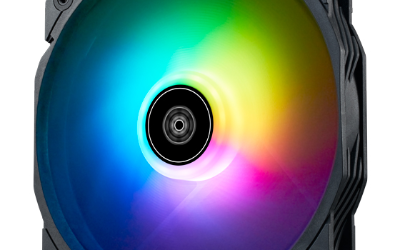
On the lighting side, ARGB means 5V addressable control, three-pin, driven by the motherboard’s ARGB header rather than a proprietary controller. That is the standard arrangement and the one to want, but Endorfy does not publish the LED count, the current draw of the lighting circuit, or whether the fan ships with a splitter or extension cable. The Fluctus line includes a PWM splitter and a 40cm extension in the box; the Stratus retail packaging contents are not stated, so do not assume the same bundle.
Where it fits
Case intake in a white build. This is the intended job. As a front or bottom intake in a mesh-fronted or lightly filtered case, the Stratus is working near its design point: low restriction, moderate speed, visible lighting. Two or three across a front panel will move air quietly and look consistent, which is the reason to buy a matched set.
Exhaust. A single Stratus at the rear or top-rear is a reasonable choice. Exhaust paths are typically less restricted than intakes, so the 1400 RPM ceiling is not a handicap.
240mm and 360mm radiators. Not the right fan. A radiator is a high-restriction medium, and a 1400 RPM fan with no published pressure figure is the wrong tool when Endorfy’s own Fluctus 120 PWM is rated higher and carries a six-year warranty. If you are buying fans specifically for a radiator, look at the 120mm fan database for models with published pressure curves.
Small-form-factor builds. The 25mm thickness is standard, so clearance is not an issue, but SFF cases often have tight intake paths behind side panels and dust filters, exactly where a pressure-oriented fan earns its price. The Stratus is a workable choice in a ventilated SFF layout and a poor one behind a fine filter.
Dust-filtered front intakes. A fine mesh or foam filter is a restriction. The Stratus will run, but it will need to sit higher in its 200–1400 RPM range to compensate, and the maker publishes no acoustics data to tell you what that costs.
What it is not
It is not a radiator fan, and Endorfy’s own line-up makes that explicit: the Fluctus 120 PWM is rated to 1800 RPM, carries a fluid dynamic bearing with a stated 100,000-hour MTBF, a 72-month warranty, a PWM splitter and a 40cm extension cable. The Stratus publishes none of those figures. If bearing type and rated life matter to you, and on a fan that will run for years they should, the Stratus gives you nothing to evaluate.
It is not a value leader on disclosed specification. A buyer comparing fans on paper cannot rank the Stratus against anything, because the paper is empty on pressure, airflow, acoustics, bearing and lifetime. That is not a claim that the fan performs badly; it is a statement that Endorfy has not given you the means to judge, and a review that invented numbers to fill the gap would be worthless.
It is not for anyone who needs a specific acoustic target. Without a published noise figure or a measured curve, matching the Stratus to a dB(A) budget is guesswork.
How it compares
Within Endorfy’s range, the Stratus sits below the Fluctus. The Fluctus is the engineered fan: the wavy, serrated leading edge developed with Synergy Cooling and covered by a European patent, a psychacoustic tuning exercise aimed at how the blade passing tone is perceived rather than at raw output. The Fluctus also carries the six-year warranty and the full published spec table, and the Fluctus 120 PWM is the model Endorfy lists with a Cybenetics Airflow Titanium certification. The Stratus inherits the family look and the ARGB ecosystem but not the disclosed engineering. See all Endorfy fans for where each model sits.
Against other brands, the comparison is limited by the missing data. Fans in this class are typically judged on published pressure and noise, and the Stratus offers neither, so a direct comparison would be assertion rather than analysis. What can be said is structural: the Stratus is a case fan sold as a case fan, priced and positioned as part of a chassis ecosystem, and it should be evaluated as one. Buyers who want to compare on numbers should start from the full fan database and treat the Stratus as a styling and ecosystem choice.
Verdict
Buy the Stratus 120 White PWM ARGB if you are fitting out a white Endorfy or white-themed case and want matching addressable lighting on the motherboard’s ARGB header, used as intake or exhaust in a low-restriction path. In that role the 200–1400 RPM range is appropriate, the 5V ARGB control is the right standard, and the fan will do its job. Do not buy it for a radiator, for a heavily filtered intake, or for any build where you intend to compare fans on pressure, noise or bearing life, because Endorfy has not published the figures and no honest review can supply them. If you want the engineered version of this fan with a disclosed spec sheet and a six-year warranty, the Fluctus is the one to buy. Full details are on the Endorfy Stratus 120 White PWM ARGB full specs page.


Comment List (0):
Load More Comments Loading...