

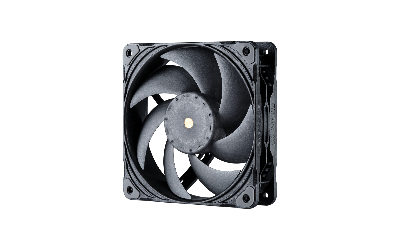
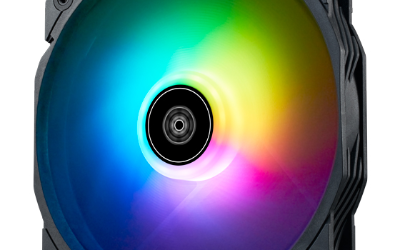
The Endorfy Stratus 120 PWM ARGB is a 120 mm, 25 mm-thick case fan with a 200–1400 RPM PWM range and addressable RGB lighting. It is aimed at builders who want a lit, speed-controlled fan for general case airflow without paying for a high-static-pressure or premium-bearing design.
Specs at a glance
| Spec | Value |
|---|---|
| Model | Stratus 120 PWM ARGB |
| Brand | Endorfy |
| Size | 120 mm |
| Thickness | 25 mm |
| Speed | 200–1400 RPM |
| Connector | 4-pin PWM + 5V 3-pin ARGB |
| Lighting | ARGB |
| Colour | Black |
What the numbers mean
The 200 RPM floor is the most useful figure here. A 1400 RPM ceiling is modest by modern standards, but a low starting speed matters more for a case fan than a high top end: it lets the fan idle quietly under light load and ramp only when the motherboard’s curve calls for it. The 25 mm frame is the standard thickness, so the fan will fit in the vast majority of 120 mm mounts without clearance issues.
Beyond that, the published specification is thin. Endorfy does not publish airflow in CFM or m³/h, static pressure, bearing type, rated noise level, or the MTBF/lifespan figure for this model. That is a real limitation for anyone comparing fans on paper, because the three numbers that most affect suitability — airflow, pressure, and bearing — are absent. The ARGB lighting is the other headline feature, and it implies a second cable and a compatible header or controller; the maker does not state the LED count or whether the lighting can be daisy-chained.
PWM control is the one genuine performance-relevant spec confirmed. It means the fan’s speed is driven by a motherboard header rather than a fixed voltage, so a custom curve is possible. Treat the 1400 RPM ceiling as a design choice for quiet-leaning builds rather than a high-performance figure.
Where it fits
Intake. This is the most natural role. A 200–1400 RPM fan with unspecified but presumably balanced blades suits front or bottom intake where the resistance is low. The low floor keeps idle noise down, and the ARGB face is visible through a mesh or glass front panel, which is presumably the point of the lighting.
Case exhaust. Also reasonable. Rear and top exhaust mounts are typically unrestricted, so a moderate-pressure fan is adequate. The 25 mm depth clears most rear panels and top rails.
Radiator. Not the intended use. Radiators need static pressure to push air through dense fins, and Endorfy publishes no pressure figure for the Stratus. Without that number, there is no basis to recommend it on a radiator, and a 1400 RPM ceiling limits headroom on thicker or higher-FPI cores. If you already own one, it will move air through a thin radiator, but it is not the specification-driven choice.
How it compares
The Stratus 120 PWM ARGB sits in the budget-to-mid ARGB segment, and the comparison that matters is against fans that publish complete data. Established ARGB 120 mm fans in the same price band typically list airflow, pressure, noise, and bearing type, which lets a buyer match the fan to the mount. The Stratus’s advantage is the 200 RPM floor, which is lower than many competitors that start around 300–500 RPM; its disadvantage is the missing data and the 1400 RPM ceiling, which is below the 1800–2000 RPM tops common on performance-oriented 120 mm fans.
Bearing type is the biggest unknown. Endorfy does not state whether this is a sleeve, rifle, or fluid-dynamic bearing, and that omission makes long-term noise behaviour and lifespan impossible to judge from the spec sheet. Buyers who care about vertical mounting or long unattended runtime should confirm the bearing before committing. The ARGB implementation is also unspecified regarding controller compatibility, so check that your motherboard or hub supports the standard Endorfy uses.
Verdict
The Stratus 120 PWM ARGB is a sensible, low-cost choice for case intake and exhaust in a lighting-focused build, chiefly because of its 200 RPM minimum and PWM control. It is not a radiator fan on the published evidence, and the spec sheet is too sparse to call it a strong value on performance grounds alone. If you need a quiet-idling, lit 120 mm case fan and can accept unverified airflow, pressure, and bearing figures, it fits. If you are matching fans to a radiator or comparing on measured data, the missing numbers are a genuine reason to look elsewhere.


Comment List (0):
Load More Comments Loading...