| Model | TL-P9-S |
|---|---|
| Size | 92 mm |
| Thickness | 25 mm |
| Speed range | –2200 RPM |
| Max airflow | 32.77 CFM |
| Max pressure | 1.98 mmH₂O |
| Max noise | 23.85 dBA |
| Bearing | S-FDB Bearing |
| Connector | 4-pin PWM + 3-pin 5V ARGB |
| Lighting | ARGB |
| Colour | Black |
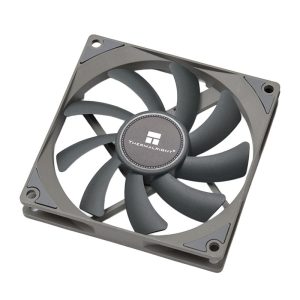
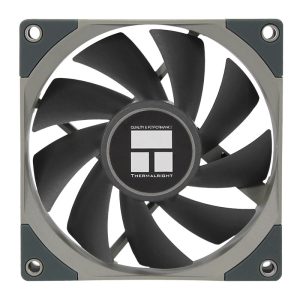
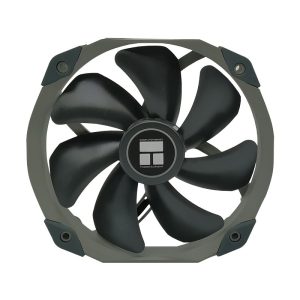
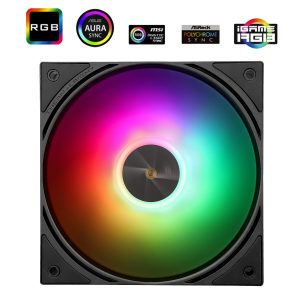
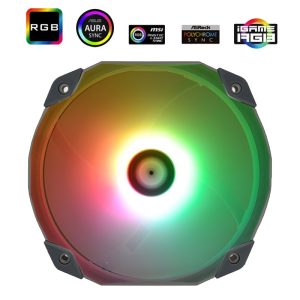
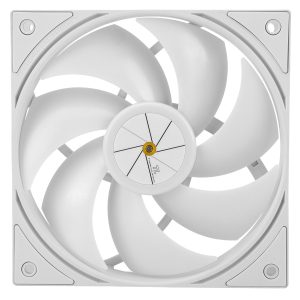
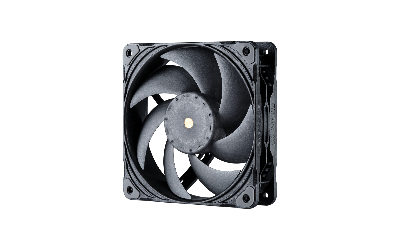
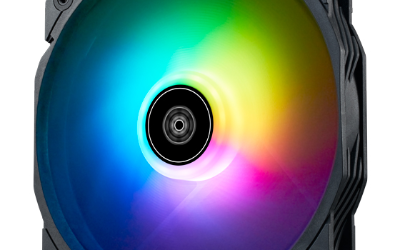
TL-P9-S is a quiet 92 mm model with ARGB lighting rated up to 2200 rpm with 32.77 CFM and 1.98 mmH2O static pressure
More Thermalright fans · All 92mm models · Browse the full fan database
About the TL-P9-S 92mm ARGB Fan
The TL-P9-S is a 92mm, 25mm-thick fan rated at 2200 RPM, which puts it in the higher-speed range for this size. Its 32.77 CFM airflow and 1.98 mmH2O static pressure make it a balanced choice: it can move air through a small case or heatsink, and the static pressure figure suggests it copes with a filter or dense fin stack better than a low-pressure airflow fan would. At 23.85 dB(A) maximum, expect audible airflow at full speed, so PWM control is useful for dialling it down when idle.
Mounting is standard 92mm with 25mm thickness, so it fits the usual 92mm case and cooler positions, though the data does not list screw hole spacing or a release year. The 4-pin PWM connector handles speed control, while the separate 3-pin 5V ARGB header drives the lighting, so your motherboard needs an ARGB header for the LEDs. The S-FDB bearing is the durability spec listed. Price is not given in the data.
Frequently asked questions
Is the Thermalright TL-P9-S 92mm ARGB quiet?
Its rated maximum noise is 23.85 dB(A) at 2200 RPM, so it is not silent at full speed. Because it uses 4-pin PWM, you can lower the speed for quieter running, but the data does not list noise at reduced RPM.
What is the TL-P9-S best used for?
With 32.77 CFM airflow and 1.98 mmH2O static pressure, it suits 92mm case positions and small heatsinks where some resistance exists. The static pressure figure makes it more versatile than a pure low-pressure airflow fan.
Does the TL-P9-S need a special RGB header?
Yes. The fan uses a 4-pin PWM connector for power and speed control plus a separate 3-pin 5V ARGB connector for lighting. Your motherboard or controller must have a 5V ARGB header for the LEDs to work.