| Model | MFX-B2DN-183PA-R1 |
|---|---|
| Size | 120 mm |
| Thickness | 25 mm |
| Speed range | 650–1800 RPM |
| Max airflow | 62 CFM |
| Max pressure | 2.5 mmH₂O |
| Max noise | 27 dBA |
| Bearing | Rifle Bearing |
| Connector | 4-Pin PWM |
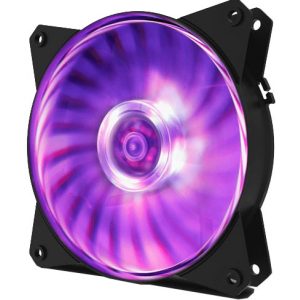
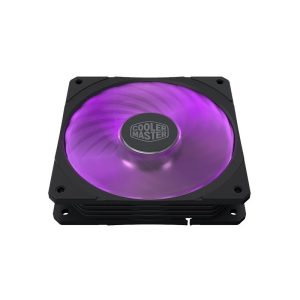
| Lighting | ARGB |
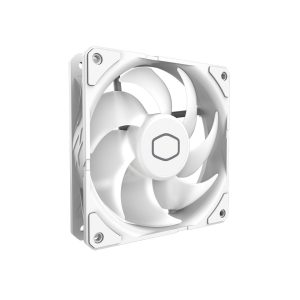
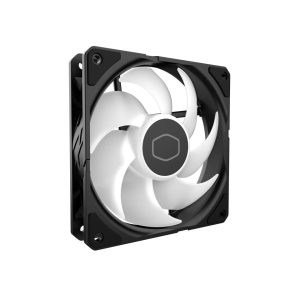
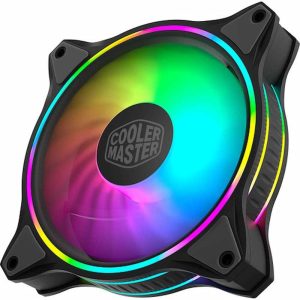
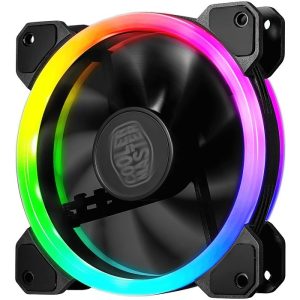
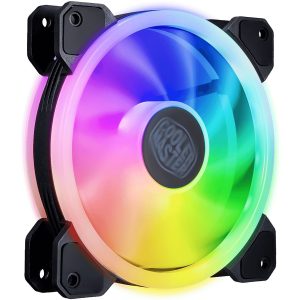
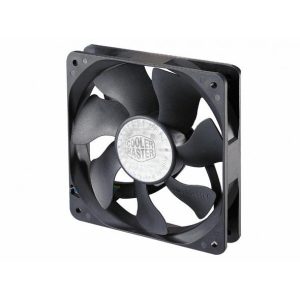
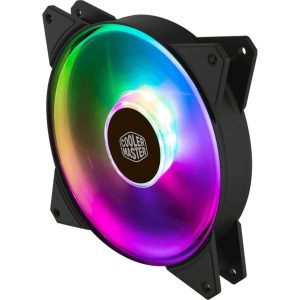
Cooler Master SickleFlow 120 ARGB 3IN1 delivers 62 CFM at up to 1800 RPM with 27 dBA noise on a 25 mm frame.
More Cooler Master fans · All 120mm models · Browse the full fan database
About the Cooler Master SickleFlow 120 ARGB 3IN1
The SickleFlow 120 ARGB 3IN1 balances airflow and pressure better than most 120 mm fans. Its 62 CFM airflow suits case intake and exhaust, while the 2.5 mmH2O static pressure means it can also push through a radiator or dense mesh filter without stalling. The 650-1800 RPM PWM range lets the motherboard scale speed to load, and the rated 27 dB(A) is the manufacturer's noise figure at full speed, so expect quieter running at lower RPM.
The 25 mm thickness and 120 mm diameter fit standard fan mounts, and the 4-pin PWM connector requires a PWM-capable header or splitter for speed control. ARGB lighting needs an ARGB header or controller, which the data does not list as included. The rifle bearing is rated for long service life, though the data does not list an MTBF figure. Price and release year are not listed in the supplied data.
Frequently asked questions
Is the Cooler Master SickleFlow 120 ARGB 3IN1 quiet?
Cooler Master rates it at 27 dB(A) at its 1800 RPM maximum. Because it is a 4-pin PWM fan with a 650 RPM minimum, it can run slower and quieter under light load, but the data does not list noise at lower speeds.
Is this fan better for case airflow or a radiator?
Both are viable. Its 62 CFM airflow suits case intake and exhaust, while the 2.5 mmH2O static pressure helps it push air through radiators and dense filters. The data does not include thermal benchmarks, so match it to your mounting needs.
What size and connector does the SickleFlow 120 ARGB 3IN1 use?
It is a 120 mm fan that is 25 mm thick, so it fits standard 120 mm mounts. It uses a 4-pin PWM connector for speed control and ARGB lighting, which requires a compatible ARGB header or controller.