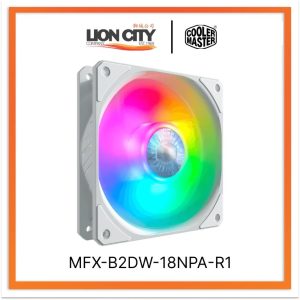
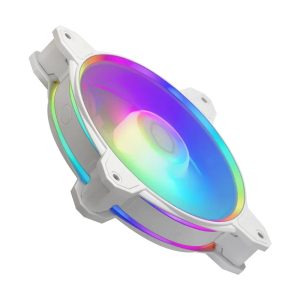
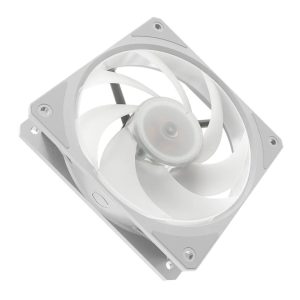
| Model | MFX-B2DN-18NPW-R1 |
|---|---|
| Size | 120 mm |
| Thickness | 25 mm |
| Speed range | 650–1800 RPM |
| Max airflow | 62 CFM |
| Max pressure | 2.5 mmH₂O |
| Max noise | 27 dBA |
| Bearing | Rifle Bearing |
| Connector | 4-Pin PWM |
| Lighting | None |
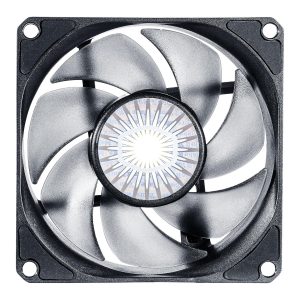
| Colour | White |
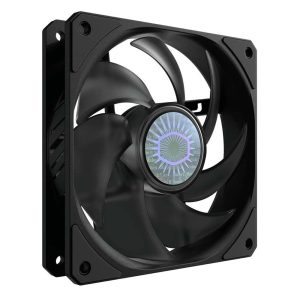
Cooler Master SickleFlow 120 White delivers 62 CFM at up to 1800 RPM with 27 dBA noise on a 25 mm frame.
More Cooler Master fans · All 120mm models · Browse the full fan database
About the Cooler Master SickleFlow 120 White
The SickleFlow 120 White balances airflow and pressure for a 120mm fan. Its 62 CFM rating moves a solid volume of air, while 2.5 mmH2O of static pressure means it can push through a radiator or a dense mesh front panel rather than stalling. That combination suits both case intake and exhaust as well as liquid-cooling radiators, so you are not locked into one role. At 27 dB(A) on the manufacturer's figure, expect audible but moderate noise near the 1800 RPM maximum; the 650 RPM floor lets you run it slower for less noise.
Mounting is standard: 120mm diameter and 25mm thickness fit common case and radiator slots, and the 4-Pin PWM connector lets a motherboard control speed across the 650–1800 RPM range. The Rifle Bearing is the stated bearing type. There is no lighting, and the colour is white. The data does not list a price or release year, so check the retailer for current pricing.
Frequently asked questions
Is the Cooler Master SickleFlow 120 White quiet?
Cooler Master rates it at 27 dB(A), which is a moderate noise level rather than silent. The 650 RPM minimum lets PWM control lower the speed for quieter operation, while 1800 RPM maximum is the loudest point.
Is this fan best for a radiator or case airflow?
It works for both. The 62 CFM airflow suits case intake and exhaust, and the 2.5 mmH2O static pressure helps it push air through radiators and dense mesh filters without stalling.
Does the SickleFlow 120 White have RGB lighting?
No. The manufacturer data lists lighting as none, so this is a plain white fan with no LEDs. Speed is controlled through the 4-Pin PWM connector rather than any lighting software.