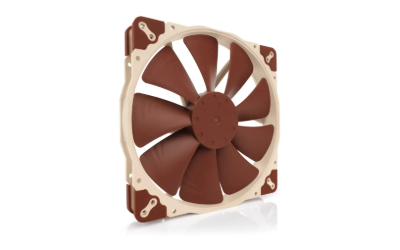
| Model | MFX-B4DN-14NPA-R1 |
|---|---|
| Size | 140 mm |
| Thickness | 25 mm |
| Speed range | 650–1400 RPM |
| Max airflow | 67 CFM |
| Max pressure | 2.2 mmH₂O |
| Max noise | 27 dBA |
| Bearing | Rifle Bearing |
| Connector | 4-Pin PWM |
| Lighting | ARGB |
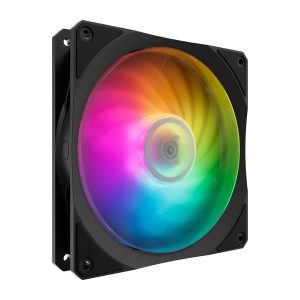
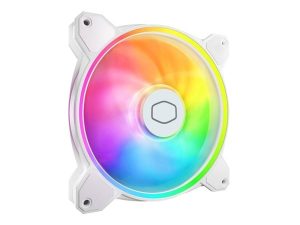
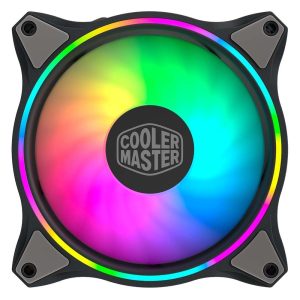
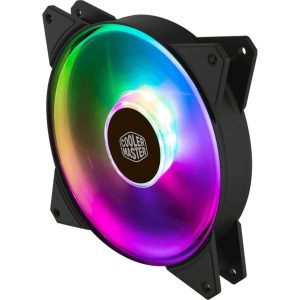
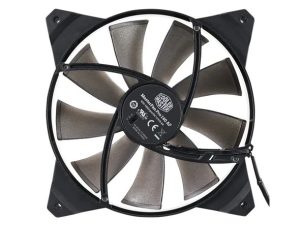
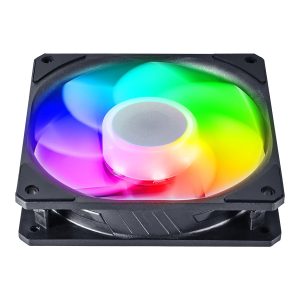
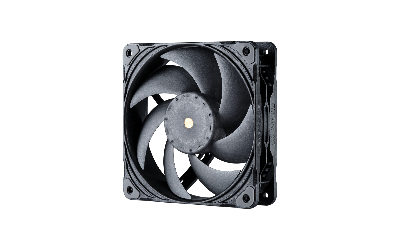
Cooler Master SickleFlow 140 ARGB 140mm delivers 67 CFM at up to 1400 RPM with 27 dBA noise on a 25 mm frame.
More Cooler Master fans · All 140mm models · Browse the full fan database
About the Cooler Master SickleFlow 140 ARGB 140mm
The SickleFlow 140 ARGB balances airflow and pressure for a 140mm fan. Its 67 CFM rating suits open case intake and exhaust where volume matters, while 2.2 mmH2O static pressure gives enough push for mesh filters and moderately restrictive front panels. It is not a dedicated radiator fan, but the pressure figure is usable on thinner, lower-density cooling setups. At 1400 RPM the rated noise is 27 dB(A), so expect audible airflow at full speed; the 650 RPM minimum lets you tune it down through PWM for quieter running.
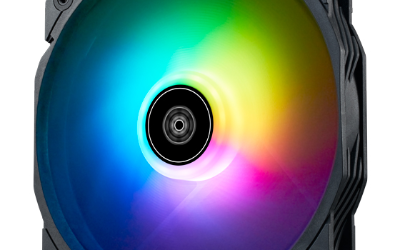
The 140mm diameter and 25mm thickness fit standard 140mm case mounts, and the 4-pin PWM connector requires a motherboard header with PWM control. ARGB lighting needs an addressable RGB header or compatible controller. The rifle bearing is rated for long-term use, though the data does not list an MTBF figure. Price and release year are not listed in the supplied data.
Frequently asked questions
Is the Cooler Master SickleFlow 140 ARGB quiet?
Cooler Master rates it at 27 dB(A) at its 1400 RPM maximum. The 650 RPM minimum and 4-pin PWM control let you lower speed for quieter operation, but the data does not list noise at reduced RPM.
Is this fan best for case airflow or a radiator?
It is a reasonable case fan: 67 CFM moves good air volume, and 2.2 mmH2O static pressure handles mesh filters and moderately restrictive panels. The data does not position it as a high-pressure radiator fan.
Does the SickleFlow 140 ARGB fit my case and motherboard?
It is a 140mm fan with 25mm thickness, so it fits standard 140mm case mounts. It uses a 4-pin PWM connector for speed control and ARGB lighting, which needs an addressable RGB header or compatible controller.